Wedding seating etiquette: who sits where
Where the couple, the parents and the wedding party sit, how to seat divorced parents and exes, where to put the singles, and the tables nobody wants.

The short version
- The couple sit at a head table or a sweetheart table; the parents sit at the tables nearest to it.
- Divorced parents each host their own table, at the same distance from the couple.
- Seat people with at least two others they know, and keep couples and plus ones together.
- Nobody should be seated by the speakers or the kitchen doors if it can be avoided; give those tables to the youngest and loudest.
Wedding seating etiquette comes down to three things: the couple are the center of the room, the people closest to them sit closest, and every guest sits with at least two people they know. The rest is detail, and most of the detail is about the few relationships that need care.
Where do the couple sit?
- A head table: one long table facing the room, with the couple in the middle and the wedding party on either side
- A sweetheart table: a table for just the two of you, which frees the wedding party to sit with their own partners
- A family table: the couple at a round table with parents or their closest people
Whichever you choose, it should be where everyone can see you, close to the dance floor, and not with your back to the room.
Where do the parents sit?
At the tables nearest to yours, traditionally each set of parents hosting their own table with grandparents and close family, or together at one table if the families get on well. The officiant and their partner are often seated with one set of parents.
How do you seat divorced parents?
Give each parent their own table, with their own partner and the people they are most comfortable with, at the same distance from the couple. Equal distance matters more than anything else on the chart, because people notice it. If the parents get on well, ask them; some would rather sit together, and that is lovely when it is true.
What about exes, feuds and people who should not sit together?
Put them at tables on different sides of the room, not just at different tables, and not both in the line of sight of the head table. You do not need to explain this to anyone. If you are unsure about a pairing, assume the cautious answer; nobody complains about being seated with friends instead.
Where should single guests sit?
With people they know, not at a table of strangers labeled by status. A "singles table" is fine only if the guests on it are friends who would choose each other. Otherwise, put each single guest with their own friends or family, and let the dance floor do the introductions.
Where do children sit?
Small children sit with their parents. Older children often love a table of their own near their parents, with something to do, and parents often love it too. Teenagers should be asked; most would rather sit with the other teenagers.
Which tables need the most thought?
- The table by the speakers: give it to friends who will be dancing anyway
- The table by the kitchen or the bar: the youngest and least fussy guests
- Elderly guests: near the exits and restrooms, away from the speakers, with a clear path
- Guests with mobility needs: a table with space around it, close to the entrance
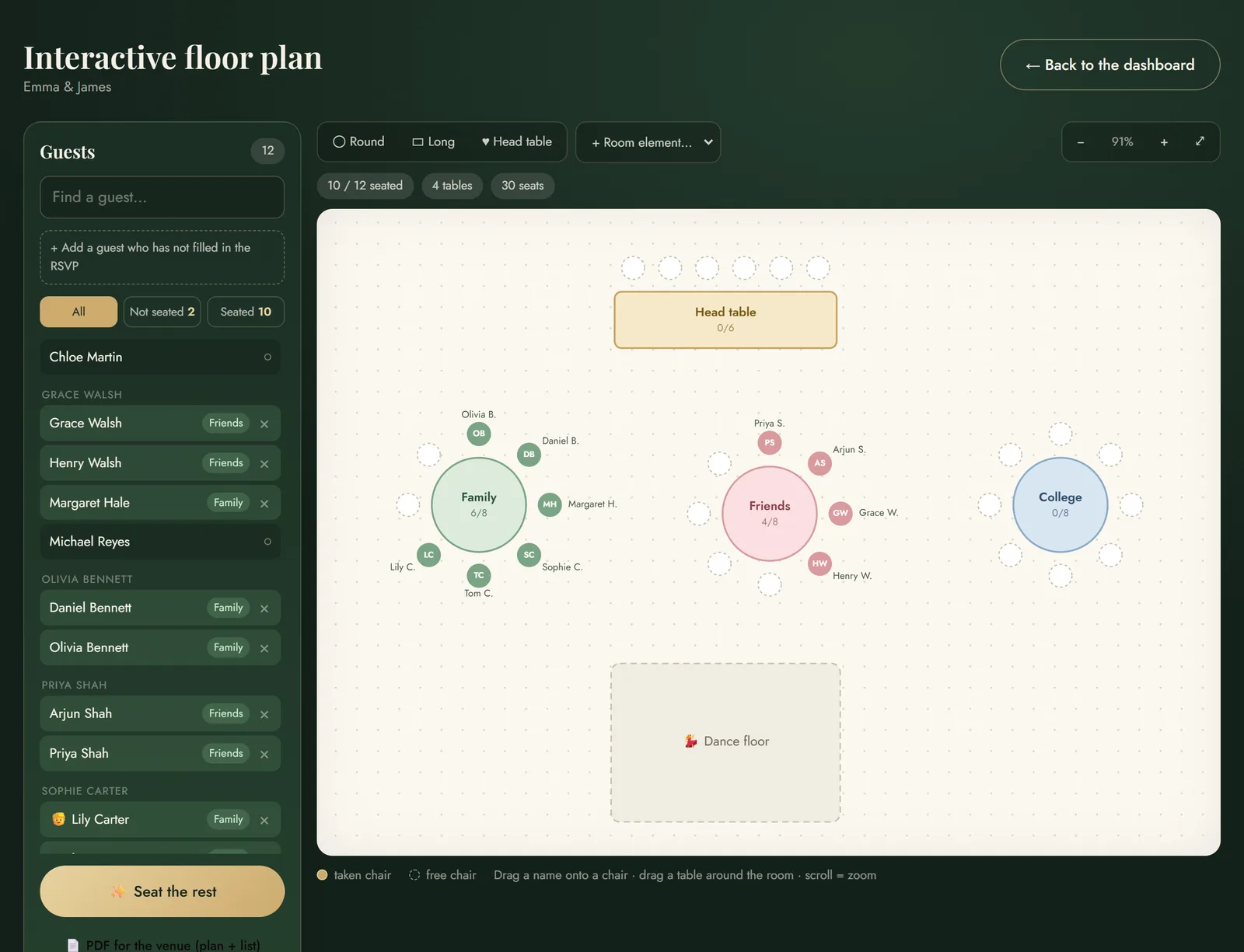
Do you need assigned seats or just assigned tables?
Assigned tables are enough for most weddings: guests find their table and choose their own chair. Assigned seats make sense when the menu is served by name (when guests chose their main course in advance) or when a particular pairing really matters. Either way, guests should be able to find their table without a crowd around one board, which is why some couples now let guests look up their table on the invitation the day before.
Seat everyone with two people they know, and seat the people who matter most where they can see you. Everything else is negotiable.
Common questions
Where do parents sit at a wedding reception?
At the tables closest to the couple, traditionally each set of parents hosting a table with grandparents and close family, or together if the families get on well.
How do you seat divorced parents at a wedding?
Give each parent their own table with their partner and closest people, placed at the same distance from the couple. If they get on well and prefer to sit together, that works too, but ask first.
Should you have a singles table at a wedding?
Only if the guests on it are friends who would choose each other. Otherwise seat single guests with their own friends or family.
What is a sweetheart table?
A small table where only the couple sit, instead of a long head table with the wedding party. It lets the wedding party sit with their own partners and gives the couple a moment to themselves.
Plan it all in one place
A seating chart, a budget and a checklist that follow your guests' replies, alongside your invitation.
Start planning free →