How to make a wedding seating chart in one afternoon
The order to place people in, what to do about tables that will not work, and why the chart should be the last thing you finish rather than the first.
The short version
- Do the seating chart after the RSVP deadline, not before. Most couples finish it in one afternoon.
- Seat people in order: the couple, parents, the wedding party, guests with special needs, then everyone else by group.
- Round tables of eight to ten are the most forgiving when guests do not know each other.
- Expect it to change until the last week, and keep it somewhere easy to edit.
The seating chart is the task couples dread most, and it is genuinely the hardest thing in wedding planning that is not about money. It is also the one that gets easier the later you leave it, which is the opposite of everything else.
Do not start until the replies are in
Every hour you spend seating people before the RSVP deadline is an hour you will spend again. Wait until you know who is actually coming, then do the whole thing in one sitting, while the picture is complete.
Place people in this order
- The couple, and whoever sits with you
- Both sets of parents, and if they are separated, sort that out before anything else
- The wedding party and their partners
- Anyone with a mobility need, near the door and away from the speakers
- Families with small children, near an exit so they can slip out
- The remaining tables, by group: work, university, neighbors, cousins
- The handful of people who fit nowhere, last
The order matters because the hard constraints go down first. Once the immovable people are placed, everything else has room to move.
The rule for the difficult tables
Every wedding has one table of people who do not obviously belong together. Do not try to make it into a group that has something in common. It will not work. Instead, seat the two most sociable people you know at that table and let them do the job. It works nearly every time.
Round or long tables
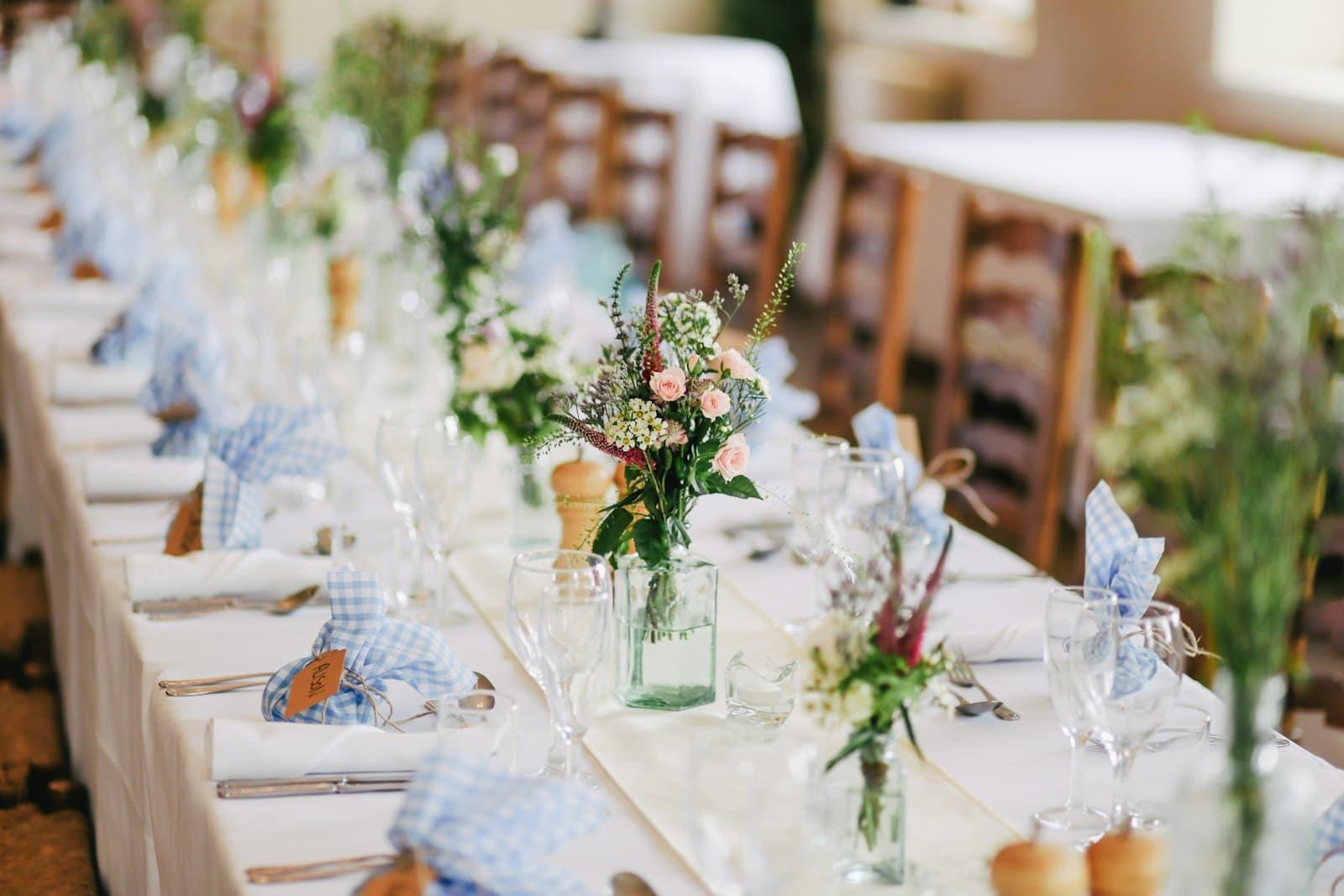
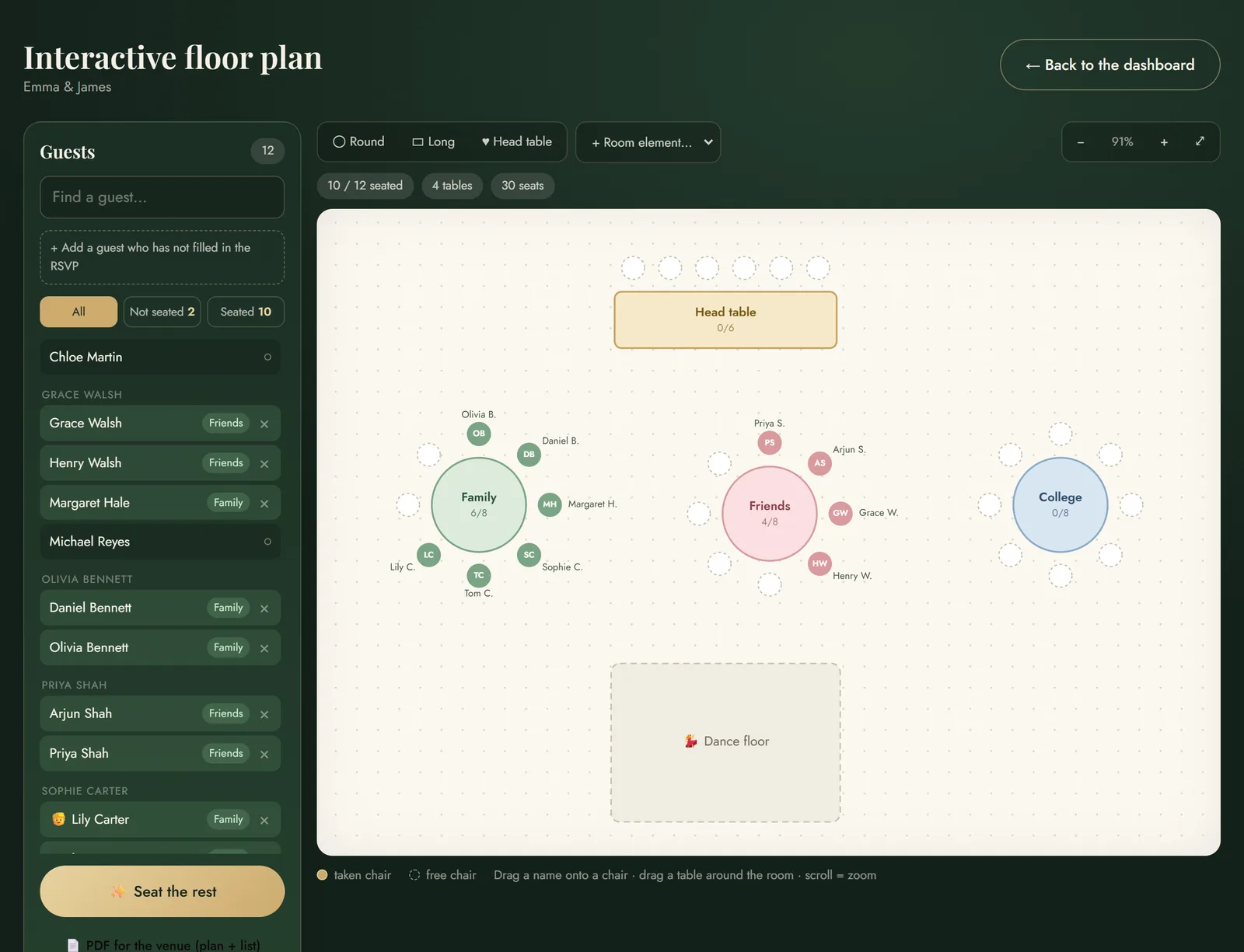
Round tables of eight to ten let everybody talk to everybody, and are much more forgiving of a group that does not know each other. Long tables look extraordinary in photographs and mean each guest talks to four people all evening. Most rooms end up with a mix, and there is no wrong answer, but if you have a lot of guests who do not know each other, round tables will do more work for you.
On a long table, leave the heads empty. Sitting one person alone at the end of a table is the least comfortable seat at a wedding.
Expect it to change
Somebody will cancel in the last week. Somebody else will ask, gently, to be moved. A chart you can change in ten seconds is worth far more than a chart that is perfect on the first attempt, which is the real argument against drawing it on paper.
Place cards and the plan on the door
Print the table plan large enough to read from six feet, and sort names alphabetically rather than by table: guests look for their own name, not for a table they do not yet know they are on. Place cards on the table itself save the second bottleneck, where eight people arrive at one table and hover.
Nobody remembers who they sat next to at a wedding where they had a good time. Everybody remembers it when they did not.
Common questions
When should we do the wedding seating chart?
After the RSVP deadline, not before. Every hour spent seating people before you know who is coming is an hour you will spend again. Once the replies are in, most couples finish the whole chart in a single afternoon.
Are round or long tables better at a wedding?
Round tables of eight to ten let everyone talk to everyone and are far more forgiving when guests do not know each other. Long tables photograph beautifully but limit each guest to about four conversations. If a lot of your guests are strangers to each other, round tables do more work for you.
How do we handle the table of people who do not fit anywhere?
Do not try to find something they have in common. Seat the two most sociable people you know at that table and let them carry it. It works almost every time.
Plan it all in one place
A seating chart, a budget and a checklist that follow your guests' replies, alongside your invitation.
Start planning free →