Chinese wedding traditions: the tea ceremony and more
The tea ceremony, door games, red envelopes, lucky colors and dates, and the banquet: what Chinese wedding traditions mean and how modern couples include them.
The short version
- The tea ceremony is the heart of many Chinese weddings: the couple serve tea to their elders, who give blessings and often red envelopes.
- Red is the color of luck and joy; white has traditionally been linked with mourning.
- Many families choose an auspicious date, and the morning may begin with playful "door games".
- Customs vary by region and family; ask the elders which ones matter to them.
Chinese wedding traditions center on family: the tea ceremony, in which the couple honor their elders, is often the most important moment of the day. Around it, many families keep traditions of luck (red, an auspicious date, the double happiness symbol) and of celebration (playful door games in the morning, a banquet in the evening). Customs vary by region, by dialect group and by family, so treat these as common practice.
The tea ceremony
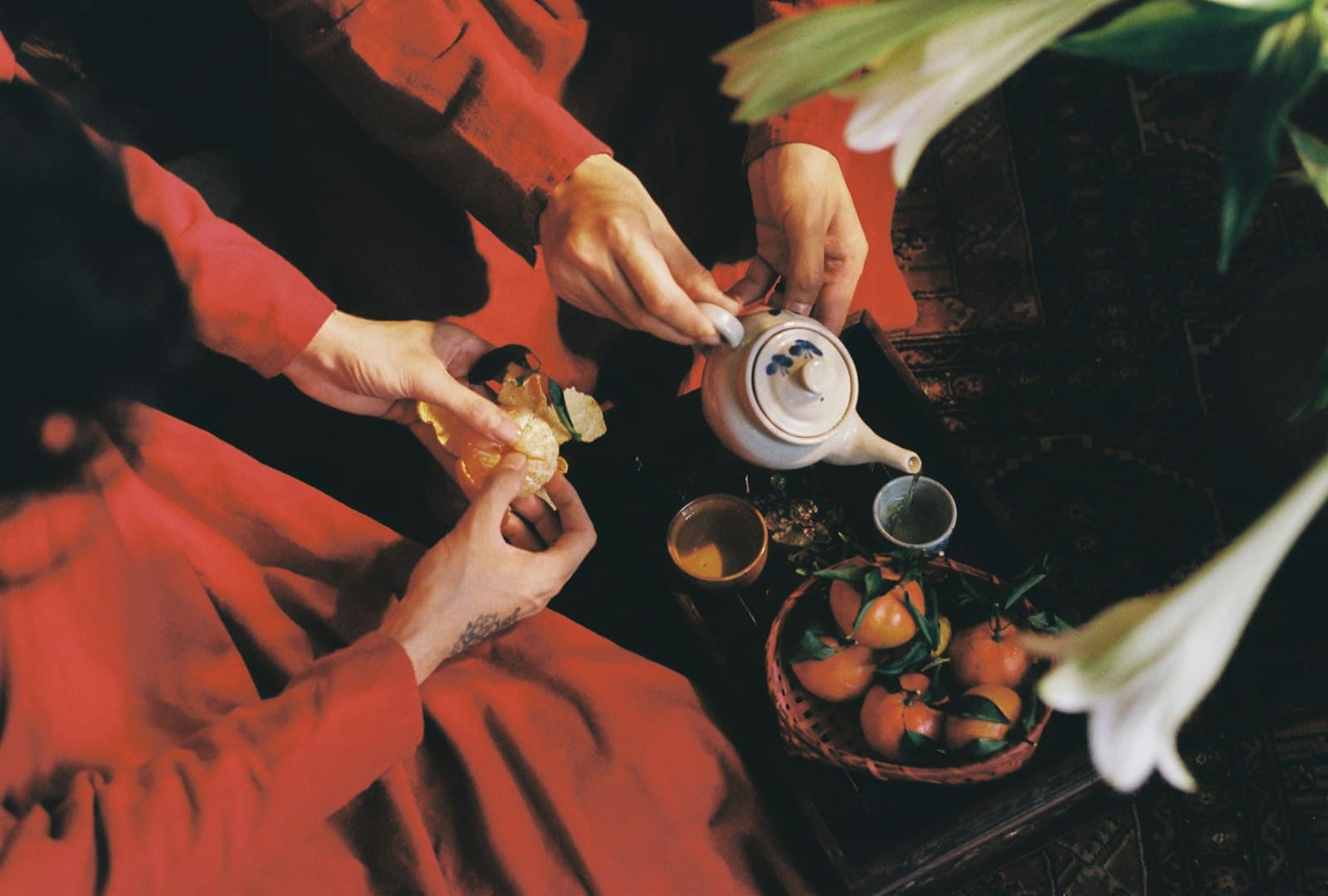
The couple kneel or bow and serve tea to their parents, grandparents and other elders, usually in order of seniority. Each elder drinks, offers blessings and often gives the couple a red envelope (hongbao) or jewelry. It is a moment of respect and of welcome into the family, and it may happen at each family's home or together, before or after the ceremony.
Door games
On the wedding morning, in many families, the groom and his friends arrive to collect the bride and must pass a series of playful challenges set by her bridesmaids, from quizzes to tasting odd flavors, and often pay a red envelope to be let in. It is meant to be funny, and it shows the groom's determination.
Luck, color and dates
- Red stands for luck and joy, and appears in dresses, decorations and invitations
- The double happiness character (囍) is a classic wedding symbol
- White has traditionally been associated with mourning, though white wedding dresses are now common alongside a red qipao or gown
- Many families choose an auspicious date, sometimes with advice from an almanac or an elder
The banquet
The evening banquet is often many courses, with dishes chosen for their meaning (fish for abundance, noodles for long life), toasts from table to table, and sometimes a change of outfit for the couple. Guests often give red envelopes as gifts rather than presents from a registry.
Including traditions in a modern or multicultural wedding
Many couples hold the tea ceremony with close family in the morning and a Western-style ceremony later, and explain the tea ceremony to guests in a line on the invitation or a sign. If you are inviting guests unfamiliar with red envelopes, a gentle note on gifts helps everyone.
The tea ceremony says what every wedding hopes for: that two families have become one.
Common questions
What is a Chinese wedding tea ceremony?
A ceremony in which the couple serve tea to their parents and elders as a sign of respect. The elders drink, offer blessings and often give red envelopes or jewelry.
What color should you wear to a Chinese wedding?
Red is associated with luck and is often worn by the couple. Many guests avoid all-white or all-black outfits, which have traditionally been linked with mourning. When unsure, ask the couple.
What is a red envelope at a Chinese wedding?
A red envelope (hongbao) containing money, the usual wedding gift from guests and from elders during the tea ceremony.
Ready to make your own invitation?
Build a digital invitation, open your RSVP and plan the whole wedding in one place.
Get started →