Mexican wedding traditions: padrinos, lazo and arras
Padrinos and madrinas, the lazo, the arras, the víbora de la mar and the tornaboda: what Mexican wedding traditions mean and how couples include them.
The short version
- Padrinos and madrinas are godparent-like sponsors who support the couple and often give a part of the ceremony or celebration.
- In the ceremony, the lazo (a rosary or cord) is placed around the couple, and the arras (thirteen coins) are blessed and exchanged.
- The víbora de la mar is a lively reception dance and game.
- Customs vary by region and family; ask the elders which ones matter.
Mexican wedding traditions often combine a Catholic ceremony with customs of family and community: padrinos and madrinas who sponsor parts of the wedding, the lazo and the arras during the ceremony, and a reception that runs late with music and dancing. Practice varies by region and family, so treat these as common traditions rather than rules.
Padrinos and madrinas
Padrinos and madrinas are sponsors, often godparents, relatives or close family friends, who support the couple. They may present the lazo, the arras or the rings during the ceremony, or help with parts of the celebration such as the cake or the music. Being asked is an honor, and many couples thank them by name on the invitation or in a program.
In the ceremony
- El lazo: a rosary, cord or garland of flowers placed around the couple's shoulders in a figure eight, for unity
- Las arras: thirteen coins blessed by the priest and given from one partner to the other, a promise to provide and share
- Often a Bible and rosary presented by sponsors
At the reception
- La víbora de la mar: a dance game in which guests form a line and pass under an arch made by the couple, often standing on chairs, while the line tries to knock them off balance
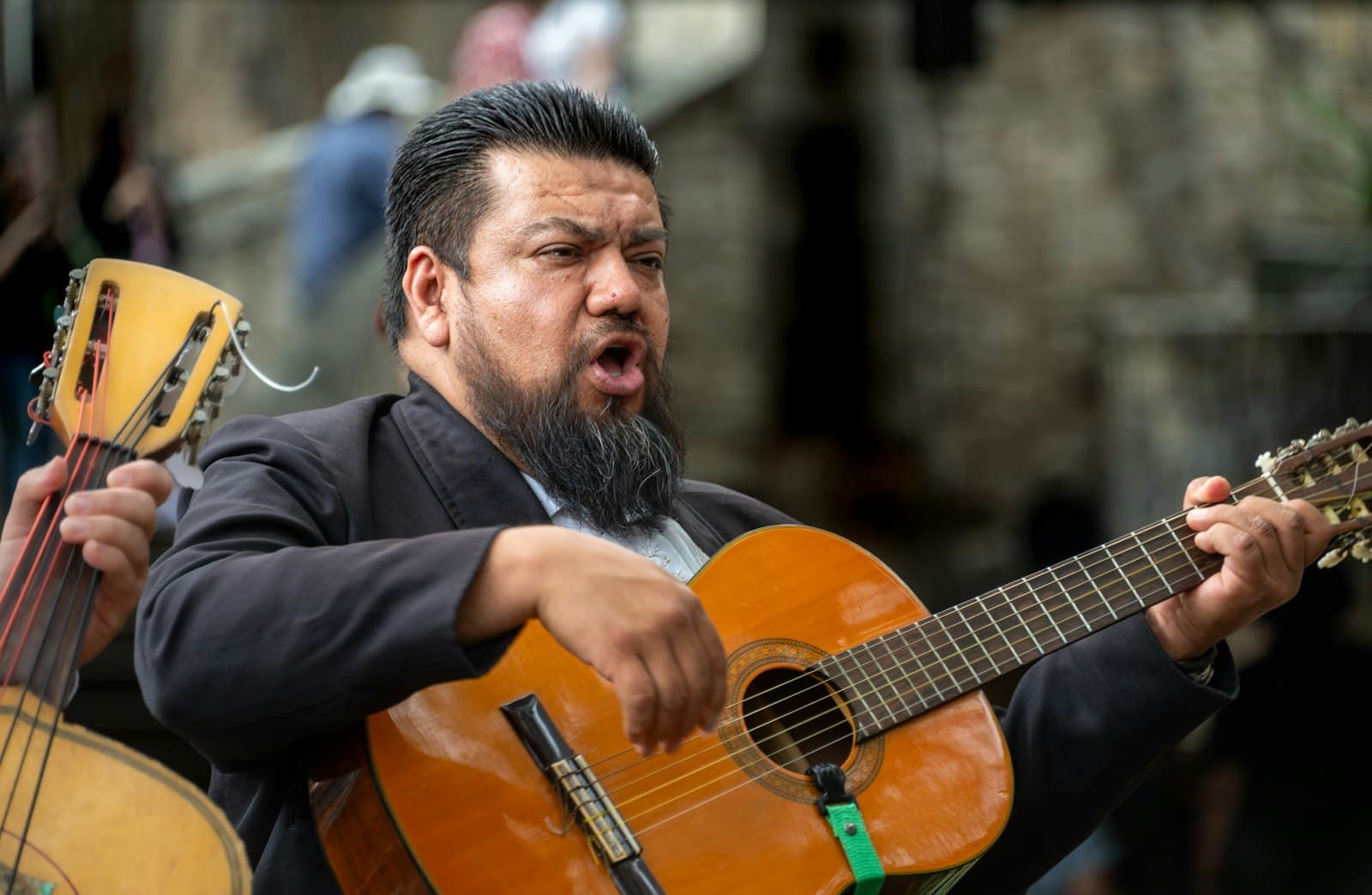
- Mariachi music, often at the start or as a surprise
- The money dance in some families, where guests pin money on the couple
- A tornaboda, an after-party that keeps the celebration going (in some families it is a gathering the next day)
Inviting guests
Invitations are often bilingual when families span Mexico and another country. Writing them in both languages in full, naming the padrinos, and giving the schedule of the church ceremony and the reception helps every guest. A digital invitation carries both languages and the map to each venue on one link.
The lazo makes visible what the vows promise: two people, one loop, no end.
Common questions
What are padrinos at a Mexican wedding?
Sponsors, often godparents, relatives or close family friends, who support the couple and may present items such as the lazo, the arras or the rings during the ceremony.
What is the lazo in a Mexican wedding?
A rosary, cord or garland placed around the couple's shoulders in a figure eight during the ceremony, symbolizing unity.
What are the arras?
Thirteen coins blessed during the ceremony and given from one partner to the other as a promise to provide for and share with each other.
Ready to make your own invitation?
Build a digital invitation, open your RSVP and plan the whole wedding in one place.
Get started →