Online RSVP for a wedding: how it works and what to ask
What to put on the reply form, what to leave off, and why every extra question costs you replies, plus how to chase the quarter of your list who never answer.

The short version
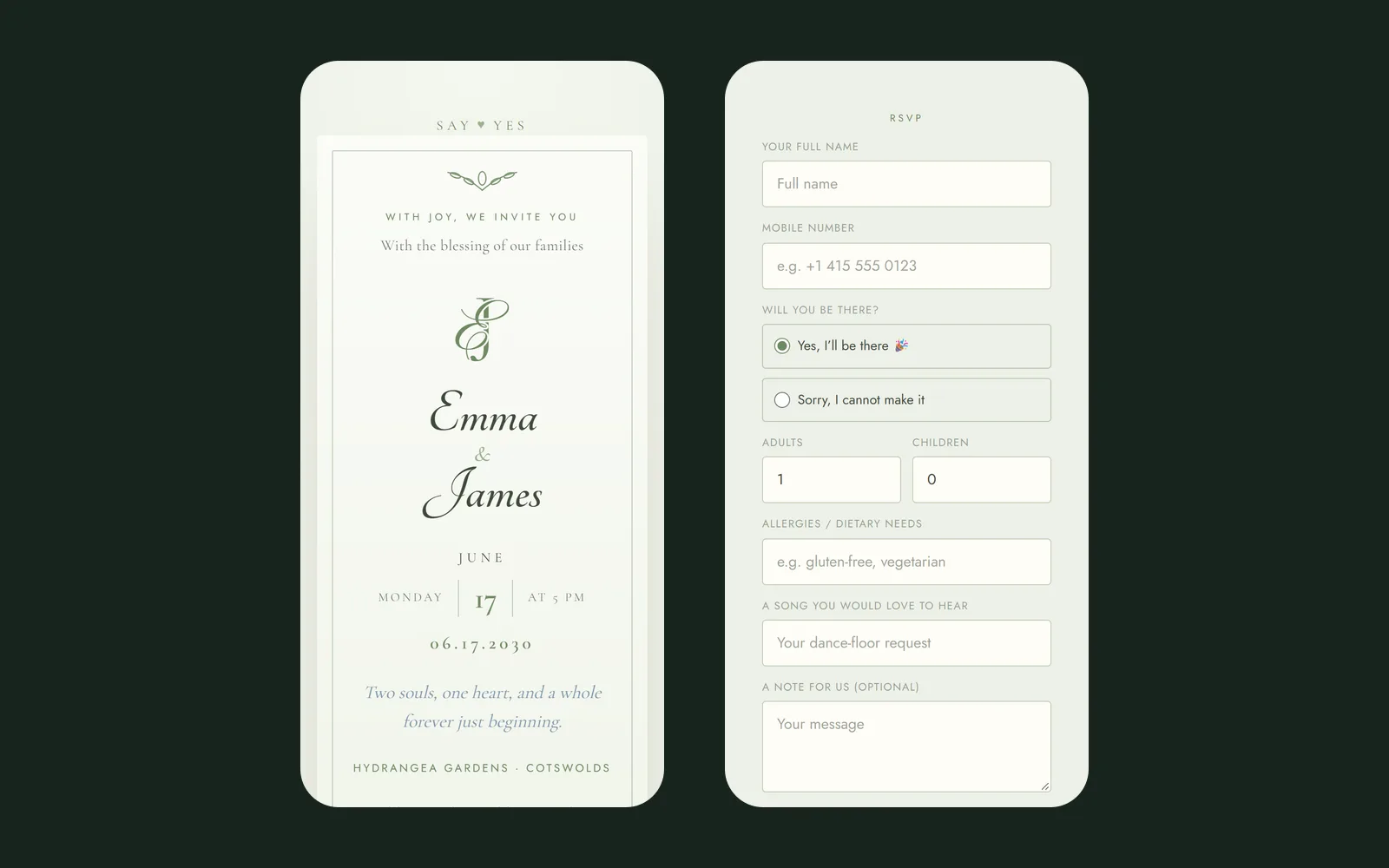
- Ask four things: are you coming, how many adults and children, everyone's names, and dietary needs as free text.
- Every extra question costs you replies, so make anything else optional.
- Make your plus-one policy clear in how you address each guest, and check the names in every reply against it.
- Expect a fifth to a quarter of your list to need a nudge, and send it only to them.
An online RSVP is a short form attached to your invitation. A guest opens the link, says whether they are coming and how many people are with them, and that answer goes straight into your guest list. You never write anything down.
The whole art of it is deciding what to ask. Every question you add lowers the number of people who finish the form, so each one has to earn its place.
The four questions worth asking every time
- Are you coming? Yes or no, with nothing else on screen at that moment
- How many of you? Adults and children counted separately, because caterers price them separately
- The names of everyone in your party, which is what turns replies into a seating chart
- Any dietary requirements? One free-text box, not a list of checkboxes
That is enough to plan a wedding. Anything beyond it is a nice-to-have, and should be optional and clearly marked as such.
The questions worth adding sometimes
- A song request: genuinely useful for the DJ, and guests enjoy answering it
- Do you need accommodation? Only if you have a room block, otherwise it raises expectations
- A note for the couple: reads as warmth, not admin, and people write lovely things
- How are you traveling? Only if you are laying on transport
Questions that quietly cost you replies
Anything that requires a guest to go and find something out. A postal address, a passport number for a destination wedding, a choice between three main courses they have not seen. Each of those turns a thirty-second task into a later task, and later means never.
If you genuinely need the menu choice, ask for it in a second round, closer to the day, from the people who have already said yes. The reply rate on a second short form to a confirmed guest is far higher than on a long first form to everyone.
Ask for dietary needs as free text
Checkboxes for vegetarian, vegan and gluten-free look tidy and miss the person with a serious nut allergy, the guest who is pregnant, and the child who will only eat plain pasta. One open box catches all of it, and your caterer would rather read fifteen sentences than guess.
Treat those answers carefully. Allergy information is health data in most privacy regimes, so it should be collected with consent, used only for the menu, and not left lying in a shared spreadsheet.
Plus ones, without the awkwardness
Decide the plus-one policy before you send anything, and make it unmistakable in how you address each guest and in the message you send with the link. Then let the form ask for the names of everyone in a guest's party. You need them for the seating chart anyway, and a name you did not expect shows up in your list straight away, so you can call that guest early and kindly.
Chasing the people who have not replied
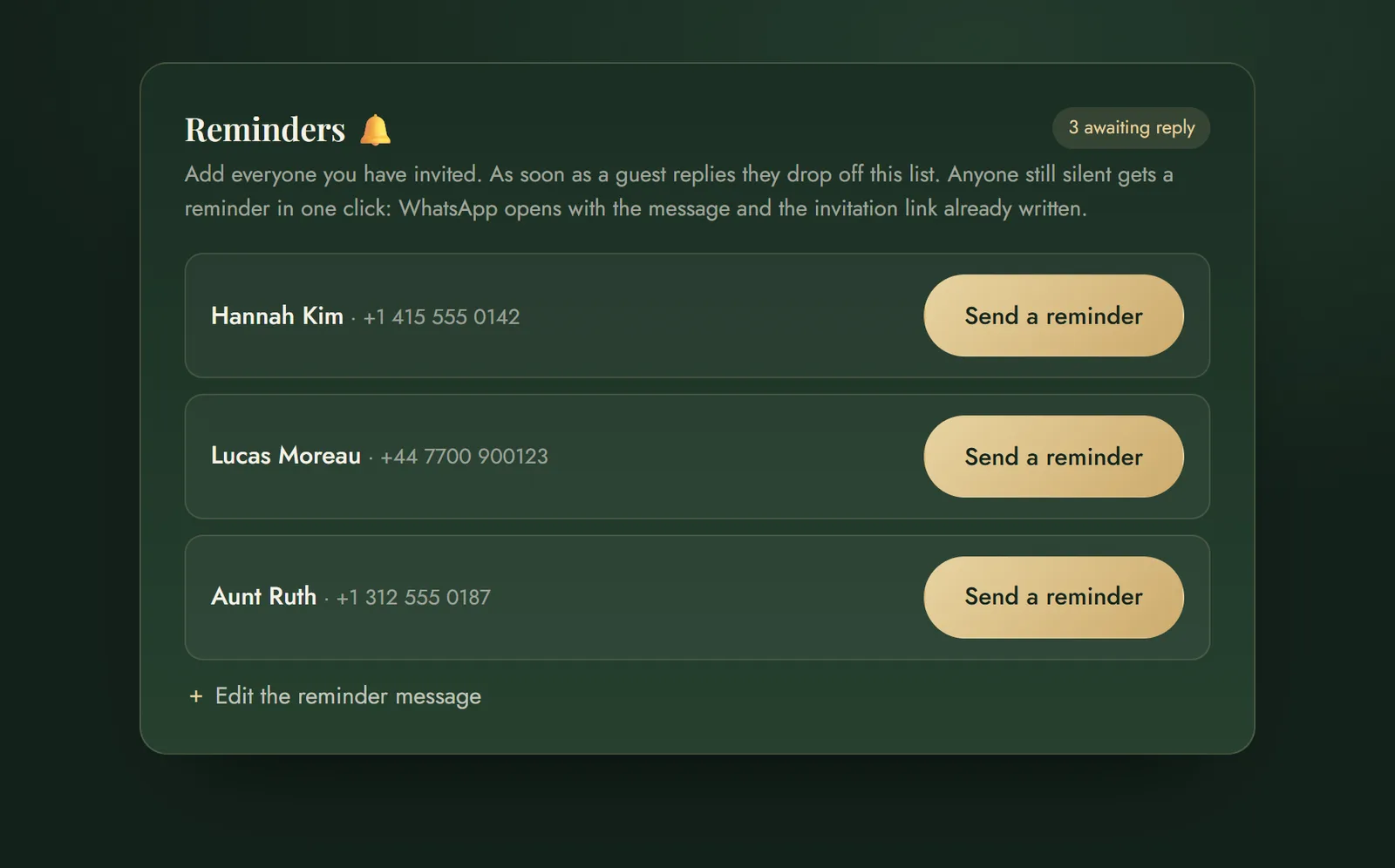
Expect a fifth to a quarter of your list to need a nudge. The rule is: message only the people who have not answered, individually, with the link. Never post a general appeal in a group chat: the people who did reply have to read it, and the people who did not will assume it is aimed at someone else.
How long the form should take
Under a minute, on a phone, with one hand, while distracted. That is the real test. If you cannot finish your own RSVP form in under a minute, your guests will not either, and the ones who do not finish it are the ones you will be phoning in six weeks.
Every question you add to an RSVP form is a question somebody decides to answer later. Later is the problem.
Common questions
What should a wedding RSVP form ask?
Four things: whether they are coming, how many adults and children are with them, the names of everyone in their party, and any dietary requirements as free text. Anything beyond that should be optional, because every extra question lowers the number of guests who finish the form.
Should we use checkboxes for dietary requirements?
No. Use one open text box. Checkboxes for vegetarian, vegan and gluten-free look tidy but miss serious allergies, pregnancy and children who will only eat certain things. Caterers would rather read sentences than guess.
How do we chase guests who have not replied?
Message only the people who have not answered, individually, with the invitation link. Never post a general reminder in a group chat: the guests who already replied have to read it, and the ones who did not will assume it is aimed at somebody else.
How many guests will not reply on time?
Plan for a fifth to a quarter of your list to need a reminder. That is normal and not rudeness, and it is why the RSVP deadline should sit three to four weeks before the day rather than two.
Ready to make your own invitation?
Build a digital invitation, open your RSVP and plan the whole wedding in one place.
Get started →