Bilingual wedding invitations: wording and layout
How to write a wedding invitation in two languages: which comes first, what to translate and what to leave, layouts that stay readable, and wording examples.
The short version
- Write the invitation in both languages in full, rather than half in each. Every guest should be able to read the whole thing.
- Put the language of the hosts, or of the place, first; or alternate, and keep the order consistent everywhere.
- Names, the date written out, times and addresses can be shared between the two versions to save space.
- Have a native speaker read the translation. Machine translation gets wedding register wrong more often than anything else.
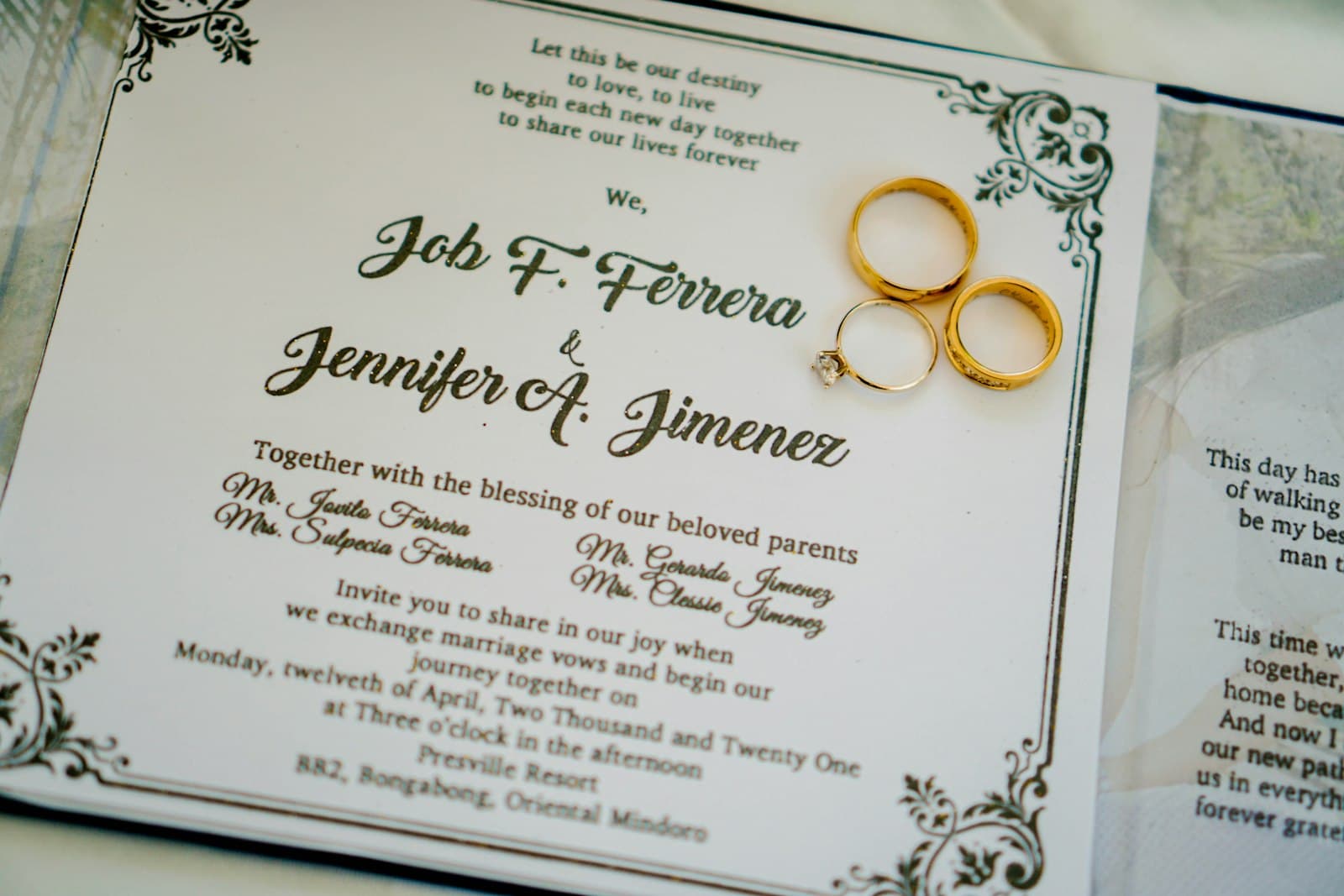
A bilingual wedding invitation says everything in both languages, so every guest can read the whole invitation in the language they are most comfortable with. The details that are the same in any language (names, numbers, addresses) can be shared between the two versions, which keeps the design calm. What should never happen is half the information in one language and half in the other.
Which language should come first?
There is no rule, only kindness. Common choices are the language of the hosts (often the parents), the language of the country where the wedding takes place, or the language most of the guests speak. Some couples alternate: one language first on the invitation, the other first on the website. Whatever you choose, keep the order consistent on every card and page.
What should you translate, and what can be shared?
- Translate: the invitation line, the schedule labels, the dress code, the RSVP request and any practical notes
- Share: your names, the venue names and addresses, phone numbers and links
- Write out the date in each language, because the order of day and month differs between countries
- Use a 24-hour clock or add "in the evening" if your guests read time differently
Layouts that stay readable
- Side by side: two columns, one language each; elegant on paper and on a wide screen, cramped on a phone
- One after the other: the full invitation in one language, then the other; the clearest choice on a phone
- Line by line: each line followed by its translation in a lighter or smaller type; works for short invitations
- Two versions: a separate invitation for each language; the simplest when families are clearly in two groups
On a digital invitation, "one after the other" is usually best, because most guests read on a phone and columns become very narrow. If you send personal messages with the link, write each guest's message in their own language, which matters more than any layout.
Wording examples
Together with their families, Sofia Martínez and Daniel Hughes invite you to celebrate their marriage. / Junto con sus familias, Sofía Martínez y Daniel Hughes tienen el honor de invitarle a celebrar su matrimonio.
Please reply by May 15. / Por favor, confirme su asistencia antes del 15 de mayo.
Notice that the second version is not a word-for-word translation. Formal Spanish invitations have their own conventions, and every language does. That is why a native speaker should read your translation: wedding wording is formal, and machine translation often gets the register wrong even when the words are right.
What about the RSVP?
Keep the questions short and the answers simple (yes or no, how many, dietary needs) so they work in either language. Ask dietary needs as free text: guests will answer in the language they think in, and your caterer will need it translated anyway, which is easier from sentences than from ticked boxes.
Every guest should be able to read the whole invitation. Two languages are a welcome; half in each is a puzzle.
Common questions
How do you write a bilingual wedding invitation?
Write the whole invitation in both languages, share the details that are the same in any language (names, addresses, links), write the date out in each language, and have a native speaker check the translation.
Which language goes first on a bilingual wedding invitation?
Usually the language of the hosts, of the country where the wedding takes place, or of most guests. Any order works if it is consistent on every card and page.
What is the best layout for a bilingual invitation on a phone?
One language after the other, rather than two columns side by side. Columns become very narrow on a phone screen.
Ready to make your own invitation?
Build a digital invitation, open your RSVP and plan the whole wedding in one place.
Get started →